Reports leadership can actually rely on.
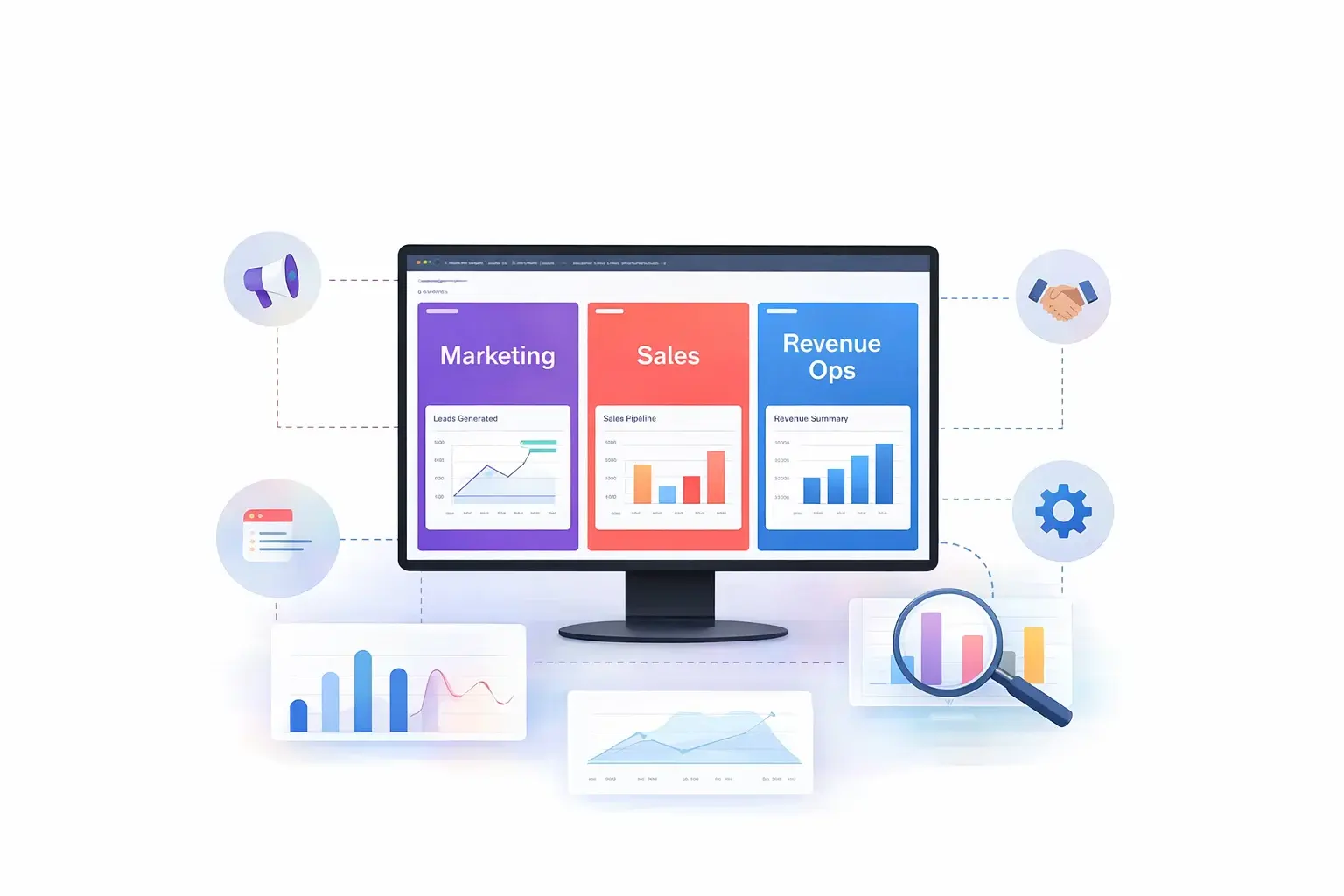
A HubSpot reporting and analytics setup provides clear, consistent visibility across marketing, sales, and operations. By structuring your CRM data for accuracy, you eliminate the need for manual spreadsheets and ensure leadership can make decisions based on real-time insights.
Trusted by

When reporting creates more questions than answers
Most teams have plenty of reports, but they lack data confidence. When leadership debates metrics instead of strategy and teams track performance in spreadsheets, your HubSpot investment fails to deliver ROI.
Different dashboards show different numbers
Inconsistent HubSpot dashboards occur when filters, date ranges, and calculations do not align. Getting three different views of pipeline or revenue creates confusion and blocks strategic decisions.
Forecasts change by who runs the report
Sales forecasts vary depending on who built the report and which fields they included, making it impossible to commit with confidence.
Leadership debates metrics instead of decisions
Meetings turn into arguments about whose numbers are correct rather than discussing strategy and next steps.
Teams track performance outside HubSpot
Marketing, sales, and CS ops maintain their own spreadsheets because they don't trust what HubSpot shows.
No single source of truth exists
Everyone pulls data from different places, applies different logic, and arrives at different conclusions about the same business question.
Reports are built but not used
Dashboards exist but no one references them in meetings because the data doesn't match reality or answer the questions leadership actually asks.
What the Reporting & RevOps Analytics Kit does
This isn't about adding more dashboards. The Reporting and RevOps Analytics Kit turns HubSpot into a reliable system of record for revenue and performance.
We focus on: Defining what metrics actually matter, making reports consistent across teams, ensuring calculations reflect real processes, and creating clarity at both leadership and operational levels.
The goal is simple: One set of numbers everyone trusts.
Delivered in 3-5 weeks.
What's included in the analytics kit
Metrics framework and definitions
- Alignment on core KPIs across marketing, sales, and CS
- Clear definitions for stages, lifecycle, and revenue metrics
- Standardized calculation methods for velocity, conversion, and pipeline
- Documentation so metrics stay consistent over time
- Agreement on what "good" looks like for each metric
Leadership reporting layer
- Executive dashboard with key business health metrics
- Revenue and pipeline overview with trend analysis
- Forecast accuracy tracking and variance reporting
- Marketing ROI and contribution to pipeline
- Customer lifecycle and retention metrics
Operational dashboards
- Sales performance by rep, team, and region
- Marketing campaign effectiveness and attribution
- Pipeline health and deal velocity tracking
- Lead flow and conversion funnel visibility
- Activity metrics tied to outcomes
Revenue and forecast reporting
- Pipeline snapshot and progression analysis
- Weighted forecast with stage-based probability
- Deal slippage and push analysis
- Closed/lost analysis with win/loss patterns
- Revenue recognition and booking tracking
Data validation and calculation logic
- Audit of existing report calculations
- Fixes for mismatched filters and date ranges
- Alignment between reports and CRM/pipeline setup
- Validation rules to catch data quality issues
- Automated alerts for anomalies or incomplete data
Governance and ownership
- Clear ownership rules for each dashboard
- Guidelines for creating new reports without breaking consistency
- Approval process for metric changes
- Regular review cadence recommendations
- Guardrails to prevent metric drift
Training and handover
- Walkthrough of all dashboards and their purpose
- Documentation of all metrics and calculations
- Training for report owners on maintenance
- Quick reference guide for common questions
We collaborate with companies all around the world

How it works
-
Week 1: Discovery and alignment
We meet with leadership and ops teams to understand what questions need answering. We align on KPIs, definitions, and success criteria.
-
Week 2: Audit and planning
We review existing reports, identify gaps and inconsistencies, and design the reporting structure that matches your business model.
-
Week 3-4: Build and validation
We build dashboards, implement calculation logic, and validate everything against real data. Stakeholders review and provide feedback.
-
Week 5: Training and handover
We walk through all reports, document everything, establish ownership, and ensure your team can maintain the setup going forward.
-
Timeline: 3 to 5 weeks
*Depends on number of teams, pipelines, complexity of revenue model, and integration requirements.
Cost of unreliable reporting
Forecast misses
by 20%+ is missed targets, board pressure, inability to plan confidently
Hours spend
each week rebuilding reports is €2,000+/month in wasted ops time
Decisions delayed
by data debates is missed opportunities and slower execution
Leadership using
spreadsheets is your CRM investment isn't delivering ROI
Teams not aligned
on performance is finger-pointing instead of problem-solving
Pricing
Fixed scope. Final price depends on:
- Number of teams and reporting layers needed
- Pipeline complexity and revenue recognition model
- Depth of attribution and funnel tracking required
- Integration with other systems (Salesforce, product data, finance tools)
Regular dashboard updates, new report requests, and metric refinement as your business evolves.
Check-in to validate reporting accuracy, update KPIs, and address new questions.
Leadership makes faster decisions, forecast accuracy improves, and teams stop debating which numbers are correct.
This is a good fit if
Leadership doesn't fully trust HubSpot reports
Forecasting requires manual work outside HubSpot
Teams argue about which numbers are correct
You want HubSpot to be your system of record for revenue
Decisions depend on accurate, real-time performance data
You're scaling and need reporting that scales with you
Frequently Asked Questions
HubSpot's default reports are generic templates. We build custom reporting tailored to your business model, revenue process, and decision-making needs - with validation that numbers are accurate.
Yes. We handle complex scenarios like multi-currency, usage-based pricing, contract amendments, multi-year deals, and custom revenue recognition rules.
Yes. We can aggregate data across portals or integrate reporting from Salesforce, product analytics, finance systems, or data warehouses.
Ideally yes, but we can do both together. Many clients combine this with our Data Hygiene Sprint to clean data first, then build reporting on a solid foundation.
The governance framework we set up includes guidelines for updating metrics without breaking consistency. We also offer ongoing support for metric refinement.
Non-technical. We train report owners on how to use and maintain dashboards, not build them from scratch. Documentation is written for business users.
We can. We've built reporting during platform transitions, mergers, and restructures. We plan for both current and future state.
Yes. We provide templates and guidelines so your team can build new reports that stay consistent with the established framework.
Build trust in your numbers
If reporting is debated, it's not doing its job.
Set up HubSpot so everyone works from the same truth and decisions happen faster.
3-5 weeks to reliable reporting. One source of truth for revenue.

CEO

COO

Lead of RevOps & Commercial Growth